A “Digital Twin” is a working copy of your plant or machine.
“Built in a physics-based virtual environment“.
Where real control logic and real physics drive the system.
So together we can test it before we build it.
“Why build a Digital Twin”
Validate design choices early
Reduce late changes and rework
Faster commissioning and ramp-up
What is a digital twin?
A digital twin is not just a 3D picture.
It’s a system that behaves like the real system.
You can start it, stop it, fault it, and prove how it recovers, before steel is cut and cables are pulled.
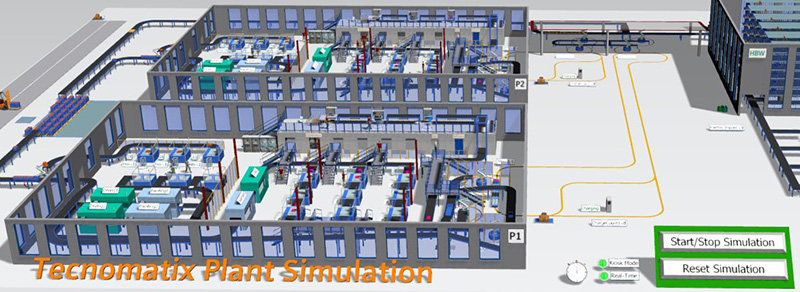
“Not just 3D”
- Looks real (3D model)
- Runs real (behaviour, sequence, timing)
- Proves real (faults, recovery, safe modes)
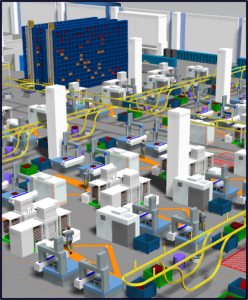
What Mexx Delivers
- Mechanical design model (Solid Edge)
- Electrical documentation (build-aligned)
- Controls logic (sequencing + standards)
- Robot simulation + programming (ABB RobotStudio)
- Virtual commissioning workflow (test scenarios)
- Handover-ready deliverables (FAT/SAT inputs)
Outcomes
- Fewer late changes
- Shorter commissioning
- Faster ramp-up
- Clearer fault recovery
- Safer operating modes
- Better training readiness
The Product Twin
This is the 3D engineering model of the equipment.
- Mechanical design
- Electrical systems
- Controls architecture
- Robot integration
Question it answers:
Will it work?
The Production Twin
This models the entire plant or production cell.
- Layout and material flow
- Timing and sequencing
- Throughput and bottlenecks
- Failure and recovery scenarios
Question it answers:
Will it deliver the required output?
The Performance Twin
This connects engineering to operations.:
- Layout and material flow
- Timing and sequencing
- Throughput and bottlenecks
- Failure and recovery scenarios
Question it answers:
Will it run reliably in service?
We connect all three levels, before capital is committed.
Toolchain + partners (positioning section)
We operate as a Siemens automation partner and have long-running ABB integration capability. That means the “virtual twin” work is not isolated—it’s tied to automation architecture and robot behavior validation.
- Siemens digital thread thinking across disciplines (design → validate → implement)
- ABB RobotStudio digital twin + virtual commissioning concepts for robot systems
- Omron components/robots where they best fit (where applicable)
- Fewer late changes and integration surprises
- Faster commissioning and ramp-up
- Clearer fault recovery and safer operating modes
- Better maintainability through validated access + sequences
- More stable alarms and troubleshooting pathways
- Better training and readiness before handover
Want to validate a system before you build it?
Tell us the scope, constraints, and target outcomes — we’ll propose a digital twin pathway that supports real commissioning and handover.
i[email protected]
(07) 5571 5733
Unit2, 28 Harrington Street, Arundel. 4214, Australia