
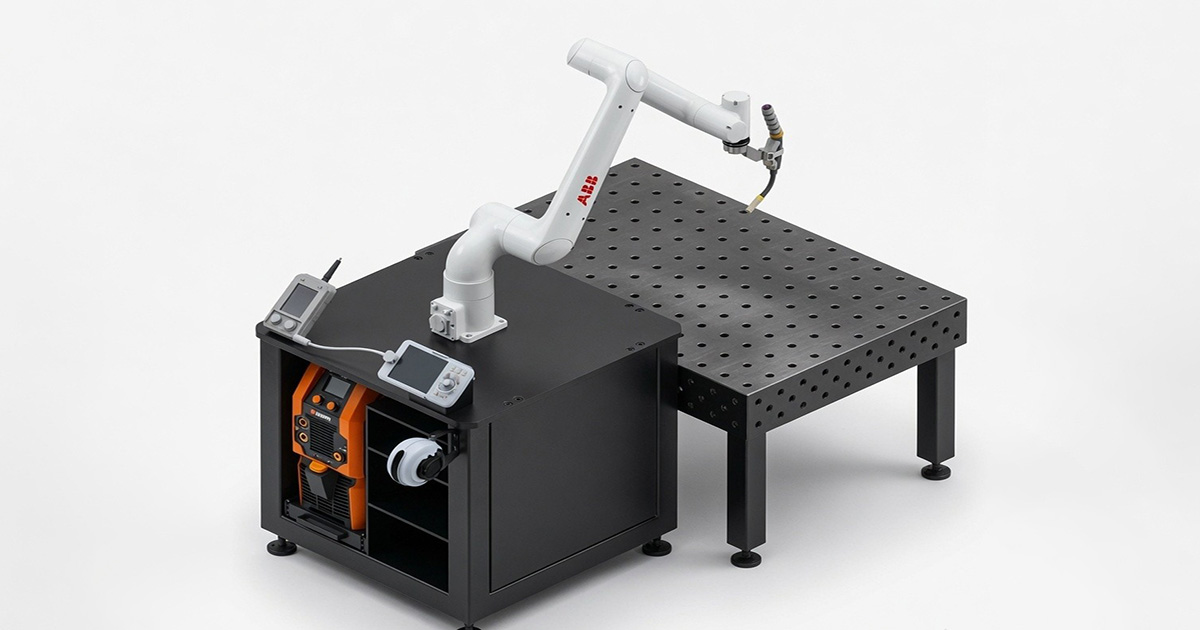
“No safety fencing” sounds like a shortcut. It isn’t. It’s how collaborative robots are designed to work.
When people hear a welding robot runs without a fenced cage, the first reaction is usually concern. It sounds like a corner being cut. In practice, it’s the opposite — it’s the result of safety being engineered into the robot rather than bolted on around it.
Traditional industrial robots move fast and hit hard, so they’re caged. A collaborative robot (cobot) is built to a different safety standard, with force and speed limiting and certified safety functions that bring it to a controlled stop when it senses contact or a person in its path.
What actually makes fenceless operation safe:
- Power and force limiting that caps how hard the robot can move
- Certified safety-rated monitored stop functions (Cat 3, PL d)
- Speed and separation monitoring around the operator
- A site-specific risk assessment for each application
That last point matters: “no fencing” isn’t automatic. It depends on the job, and a risk assessment confirms it for your parts and your workshop. Done properly, it means a welding cell that fits in the floor space you already have — no cage, no guarding budget, no redesign of your layout.
That’s how MexxBot is built: an ABB collaborative robot with SafeMove safety functions, paired with a Kemppi welder, ready to work alongside people.
Curious whether it suits your workshop?
You can configure a MexxBot system, see live pricing, and reserve online — or ask us about a risk assessment for your specific application.